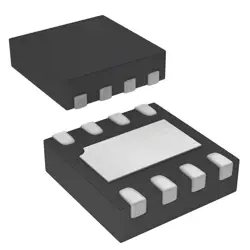
이미지는 참조용만
OP297FSZ
- 제조업체
- Mfr.부분 #OP297FSZ
- 패키지
- 데이터시트 OP297FSZ DataSheet
- 재고 있음2829
100% 원래 &새로운
배송 준비 24 시간
365 일 보장
RFQ 및더 많은 할인
사양
| Package | Tube |
| ProductStatus | Active |
| AmplifierType | General Purpose |
| NumberofCircuits | 2 |
| SlewRate | 0.15V/µs |
| GainBandwidthProduct | 500 kHz |
| Current-InputBias | 35 pA |
| Voltage-InputOffset | 50 µV |
| Current-Supply | 525µA (x2 Channels) |
| Voltage-SupplySpan(Min) | 4 V |
| Voltage-SupplySpan(Max) | 40 V |
| OperatingTemperature | -40°C ~ 85°C |
| MountingType | Surface Mount |
| Package/Case | 8-SOIC (0.154, 3.90mm Width) |
개요
Description
"Introduction to OP297FSZ" is likely a course or module identifier that isn't specifically recognizable without additional context. In academic or technical settings, such codes often represent specific subjects, special projects, or industry-specific training. For a concise understanding:
1. OP297FSZ: This could be a course code where "OP" might denote a department or field of study, "297" a particular course level or sequence, and "FSZ" a section or specialization.
2. Content: Typically, an "Introduction to" course covers foundational concepts, key terminology, and essential skills pertinent to its focus area. It sets the stage for more advanced studies.
3. Purpose: The course aims to equip participants with basic knowledge, ensuring they can engage with more complex material in subsequent modules.
4. Audience: Likely intended for beginners or individuals new to the subject matter, whether students, professionals, or enthusiasts.
Without specific details, this general framework can apply to courses in academia, corporate training, or technical industries. For precise information, consulting the course syllabus or academic catalog where it's offered would be necessary.
Features
The OP297FSZ is a precision operational amplifier characterized by its low offset voltage and low noise performance. Key features include:
1. Low Offset Voltage: This op-amp boasts minimal offset voltage, enhancing precision in applications requiring high accuracy.
2. Low Noise: It offers low voltage noise, making it suitable for applications that demand clean, precise signals.
3. Dual Supply Operation: The OP297FSZ operates with dual power supplies, typically from ±5V to ±15V, allowing for flexibility in various circuit designs.
4. High Common-Mode Rejection Ratio (CMRR): This feature ensures that the op-amp can effectively reject any common-mode signals, improving performance in differential applications.
5. Low Input Bias Current: It has a low input bias current, which is crucial for high-impedance sensor applications.
6. Wide Bandwidth: The amplifier provides a wide bandwidth, facilitating high-speed signal processing.
7. High Slew Rate: With a rapid slew rate, the OP297FSZ can handle fast-changing signals efficiently.
These features make the OP297FSZ suitable for precision applications such as sensor interfacing, medical instrumentation, and data acquisition systems.
Package
The OP297FSZ is an operational amplifier that comes in an 8-lead Small Outline Integrated Circuit (SOIC) package. This type of packaging is commonly used for surface-mount technology applications, providing a compact form factor with leads on two sides for easy mounting on printed circuit boards.
Pinout
The OP297FSZ is a dual operational amplifier. It typically comes in an 8-pin surface-mount package. Here is a concise description of its pin configuration and functions:
1. Pin 1 - Offset Null (A): Used for offset voltage adjustment for amplifier A.
2. Pin 2 - Inverting Input (A): The inverting input terminal for amplifier A.
3. Pin 3 - Non-Inverting Input (A): The non-inverting input terminal for amplifier A.
4. Pin 4 - V- (Negative Supply): The negative power supply terminal.
5. Pin 5 - Non-Inverting Input (B): The non-inverting input terminal for amplifier B.
6. Pin 6 - Inverting Input (B): The inverting input terminal for amplifier B.
7. Pin 7 - Offset Null (B): Used for offset voltage adjustment for amplifier B.
8. Pin 8 - V+ (Positive Supply): The positive power supply terminal.
The OP297FSZ is designed for precision applications and offers low offset voltage and low power consumption, making it suitable for various analog signal processing tasks.
Manufacturer
The OP297FSZ is manufactured by Analog Devices, Inc. Analog Devices is a multinational company that specializes in the design and manufacturing of analog, mixed-signal, and digital signal processing (DSP) integrated circuits. These products are used in a wide variety of electronic equipment and systems, spanning industries such as communications, healthcare, automotive, aerospace, and industrial applications. Analog Devices is known for its expertise in high-performance analog technology and innovation in semiconductors.
Application
The OP297FSZ is an operational amplifier designed for precision applications. Its key application areas include instrumentation amplifiers, precision data acquisition, medical instrumentation, and sensor signal conditioning. Its low offset voltage, low drift, and high open-loop gain make it suitable for applications requiring high accuracy and stability. Additionally, it can be used in integrators, active filters, and precision voltage references.
Equivalent
The OP297FSZ is a precision dual operational amplifier. Equivalent products include:
1. LT1013 by Analog Devices (formerly Linear Technology)
2. OPA2277 by Texas Instruments
3. MCP6022 by Microchip Technology
4. LM158 by Texas Instruments
5. NJM4558 by NJR (New Japan Radio Co., Ltd.)
While these alternatives have similar functionalities, verify specifications and compatibility for your specific application.
배송
배송 방법We
DHL, FedEx, TNT, UPS 또는 선택한 다른 운송업체를 통해 글로벌 배송 서비스를 제공합니다.
배송 요금 참조 (DHL/FedEx):
DHL은: 배송 비용은 $25-$45 (0.5kg)에서 2-5 영업일의 추정적 배달 시간이 있습니다.
FedEx는: 배송 비용은 $25-$40 (0.5kg)에서 3-7 영업일의 추정적 배달 시간을 가지고 있습니다.
UPS는: 배송 비용은 $25-$45 (0.5kg)에서 3-7 영업일의 추정적 배달 시간을 가지고 있습니다.
TNT는: 배송 비용은 $25-$65 (0.5kg)에서 3-7 영업일의 추정적 배달 시간을 가지고 있습니다.
EMS는: 배송 비용은 $30-$50 (0.5kg)에서 7-15 영업일의 추정적 배달 시간을 제공합니다.
등록된 항공우편: 배송 비용은 $2-$4 (0.1kg), 예상 배달 시간 5-20 영업일.
지불
Payment Methods
지불 기간은 100% 사전 지불입니다.
현재, 우리는 아래 지불 방법만 받아들입니다.:
1. PayPal
2. 신용/직불 카드
3. 전선 전송
비슷한
-
![MX29F400CBTI-70G]() MX29F400CBTI-70G
Macronix
-
![MX66U1G45GXDI00]() MX66U1G45GXDI00
Macronix
-
![MX25V2033FM1I]() MX25V2033FM1I
Macronix
-
![MX25R3235FZNIL0]() MX25R3235FZNIL0
Macronix
-
![MX25L8035EM2I-10G]() MX25L8035EM2I-10G
Macronix
-
![MX25R6435FBDIL0]() MX25R6435FBDIL0
Macronix
-
![MX25L25673GMI-10G]() MX25L25673GMI-10G
Macronix
-
![MX25U25643GZNI00]() MX25U25643GZNI00
Macronix
-
![MX25L2006EM1I-12G]() MX25L2006EM1I-12G
Macronix
-
![MX25U3232FZBI02]() MX25U3232FZBI02
Macronix
-
![MX25L6433FM2I-08G]() MX25L6433FM2I-08G
Macronix
-
![MX25U6435FM2I-10G]() MX25U6435FM2I-10G
Macronix